
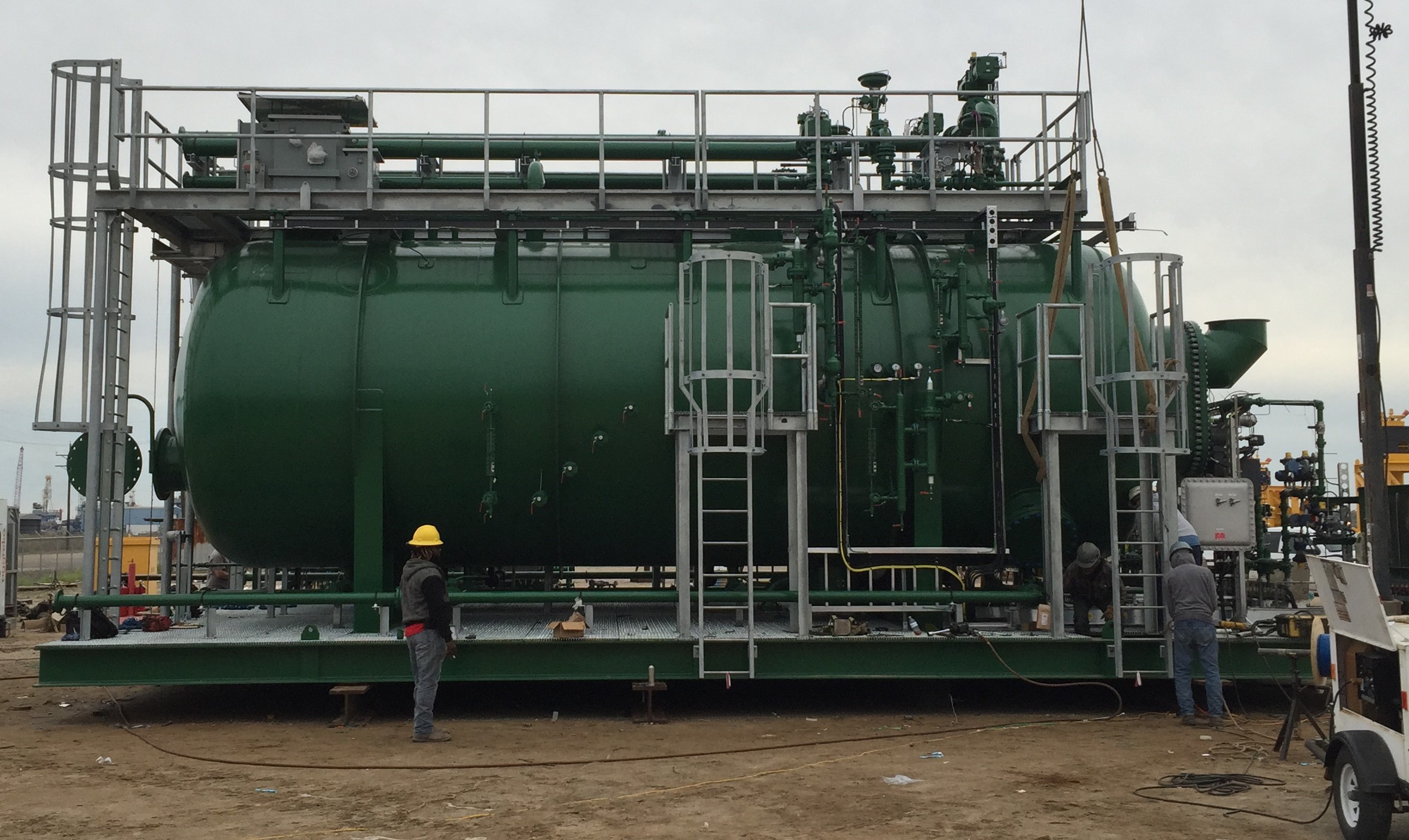
Electrostatic Treating: Improving Crude Oil Separation Efficiency in Modern Production
In oil and gas production, efficient separation is essential for maintaining product quality, protecting infrastructure, and ensuring reliable facility operation. Produced fluids rarely leave the reservoir as pure crude oil. Instead, they typically arrive at surface facilities as a mixture of crude oil, formation water, dissolved salts, and suspended solids.
Removing water from crude oil is a critical step in surface processing. If water remains in the oil stream, it can increase transportation costs, accelerate corrosion, create operational issues in downstream equipment, and prevent the crude from meeting pipeline or refinery specifications.
One of the most effective technologies used to remove emulsified water from crude oil is electrostatic treating. By applying high-voltage electric fields inside specialized vessels, electrostatic treaters accelerate the coalescence of water droplets, dramatically improving separation efficiency.
For many production facilities, electrostatic treaters are a key component in achieving stable operation and delivering on-spec crude oil.
Why Water Removal Is Critical in Crude Oil Processing
When crude oil is produced, it commonly contains significant volumes of formation water. During production and transportation, turbulence, pressure changes, and naturally occurring surface-active compounds can cause water to become finely dispersed within the oil phase. This creates an oil-water emulsion.
Stable emulsions present a challenge for conventional gravity separation. Small water droplets can remain suspended in the crude oil for extended periods, preventing effective dehydration.
If this water is not removed, several operational problems can occur:
- Increased pipeline transportation costs due to excess water
- Accelerated corrosion in pipelines, vessels, and process equipment
- Salt contamination that can damage refinery equipment and catalysts
- Reduced storage tank capacity and operational inefficiencies
For these reasons, crude oil must typically be treated to reduce water content to very low levels before entering transportation or refining systems.
While heater treaters and gravity separators can remove free water effectively, they often struggle with tight emulsions. Electrostatic treaters provide a powerful solution for breaking these emulsions and accelerating water separation.
What Is Electrostatic Treating?
Electrostatic treating is a dehydration process that uses high-voltage electric fields to enhance the separation of water droplets from crude oil emulsions.
Inside an electrostatic treater, the crude oil passes through an electrically charged region created by electrode grids. The electric field causes water droplets suspended in the oil to become polarized. Once polarized, droplets are attracted to one another, causing them to collide and merge into larger droplets.
This process is known as electrostatic coalescence.
As droplets grow larger, gravity can separate them much more easily from the oil phase. The water settles to the bottom of the vessel, forming a water layer that can be removed through a controlled outlet. The dehydrated crude oil exits from the top of the vessel and continues through the production process.
This method significantly improves separation performance compared to gravity settling alone.
How Electrostatic Treaters Work
Although designs vary by manufacturer and application, most electrostatic treaters follow the same basic operating sequence.
Inlet Distribution
Wet crude oil enters the treater through inlet distributors designed to spread the flow evenly across the vessel. Proper distribution prevents channeling and ensures that the entire fluid stream passes through the electric field.
Heating and Chemical Treatment
In many systems, the crude oil is heated before entering the electrostatic treater. Increased temperature lowers oil viscosity and helps destabilize emulsions.
Demulsifier chemicals may also be injected upstream. These chemicals weaken the protective film surrounding water droplets, allowing them to merge more easily when exposed to the electric field.
Electric Field Application
Inside the vessel, electrode grids generate a high-voltage electrical field. This field typically ranges from 10,000 to 30,000 volts, depending on system design and operating conditions.
The electric field interacts directly with the dispersed water droplets in the crude oil.
Droplet Polarization
The electrical field induces polarity within each water droplet. Opposite electrical charges form on each end of the droplet, causing nearby droplets to attract one another.
Coalescence
As droplets move toward each other, they collide and merge into larger droplets. This process greatly accelerates droplet growth compared to gravity separation alone.
Gravity Separation
Once droplets grow large enough, gravity pulls them downward into the water layer at the bottom of the vessel. The separated water is removed through level control systems while dehydrated crude oil exits the vessel.
With proper operation, electrostatic treaters can reduce water content in crude oil to less than 0.1 percent in many applications.
AC vs DC Electrostatic Treating Technologies
Electrostatic treaters operate using either alternating current (AC) or direct current (DC) electrical fields. A vessel uses one or the other depending on the design and application.
AC Electrostatic Treaters
AC electrostatic treaters are the most common design used in upstream oil production facilities.
These systems apply a high-voltage alternating electrical field between electrode grids. The alternating polarity causes water droplets to continuously deform and oscillate within the electric field. This motion increases the likelihood of droplet collisions and promotes rapid coalescence.
AC electrostatic treaters are highly effective at removing bulk water and moderately stable emulsions. They are frequently integrated into heater treaters or used as dedicated dehydration vessels in production facilities.
DC Electrostatic Treaters
DC electrostatic treaters use a constant direct current field to polarize water droplets.
Because the polarity remains constant, droplets align with the electrical field and attract neighboring droplets, encouraging coalescence. DC systems can be particularly effective when treating extremely fine emulsions that require more controlled droplet alignment.
DC electrostatic treaters are often used in specialized applications such as crude desalting systems or facilities processing very stable emulsions.
Selecting the Appropriate System
Choosing between AC and DC electrostatic treating depends on several operational factors, including:
- Crude oil composition
- Emulsion stability
- Production flow rates
- Required dehydration and desalting performance
Both technologies are proven methods for improving crude oil dehydration when properly designed and operated.
Benefits of Electrostatic Treating
Electrostatic treaters provide several advantages for oil and gas production facilities.
Improved Separation Efficiency
The electrical field significantly increases droplet collision rates, allowing emulsified water to separate much faster than through gravity settling alone.
Higher Crude Oil Quality
By reducing water and salt content, electrostatic treaters help ensure crude oil meets pipeline and refinery specifications.
Reduced Chemical and Energy Consumption
Because electrostatic treaters accelerate separation, facilities often require less heating and lower volumes of demulsifier chemicals.
Protection of Downstream Equipment
Removing water early in the process reduces the risk of corrosion, scaling, and fouling in pipelines, storage tanks, and refinery equipment.
Increased Facility Throughput
Efficient dehydration allows production systems to handle higher fluid volumes while maintaining product quality.
Operational Considerations
While electrostatic treaters are highly effective, they must be properly operated and maintained to achieve reliable performance.
Key operational considerations include:
Electrical system reliability
High-voltage transformers and power supplies must be inspected regularly to ensure stable operation.
Electrode condition
Electrodes should be monitored for fouling, scaling, or mechanical damage that could reduce field strength.
Oil-water interface control
Maintaining the correct interface level inside the vessel is essential for stable separation.
Chemical compatibility
Demulsifiers must be compatible with the electrostatic process to maximize droplet coalescence.
Routine inspections and preventive maintenance are critical for maintaining efficient treater performance and preventing operational disruptions.
The Role of Electrostatic Treating in Modern Production Facilities
As reservoirs mature and production fluids become more complex, crude oil emulsions are becoming increasingly difficult to treat using conventional separation methods alone.
Electrostatic treating technology allows operators to overcome these challenges by accelerating water removal and stabilizing production systems.
By improving dehydration performance, electrostatic treaters help operators:
- Deliver on-spec crude oil
- Protect pipelines and downstream equipment
- Improve operational reliability
- Reduce processing costs
- Maintain stable facility throughput
For many oil and gas facilities, electrostatic treating is not simply an optional upgrade. It is a critical component of the surface processing system.
Supporting Reliable Operations
Electrostatic treaters operate in demanding environments where safety, reliability, and efficiency are essential. Proper installation, maintenance, and troubleshooting require experienced technicians who understand both the equipment and the production process.
Working with experienced industrial service providers helps ensure electrostatic treating systems operate at peak performance and continue delivering the separation efficiency operators depend on.
As production challenges evolve, reliable treating systems and experienced technical support remain key factors in maintaining efficient and safe oil and gas operations.